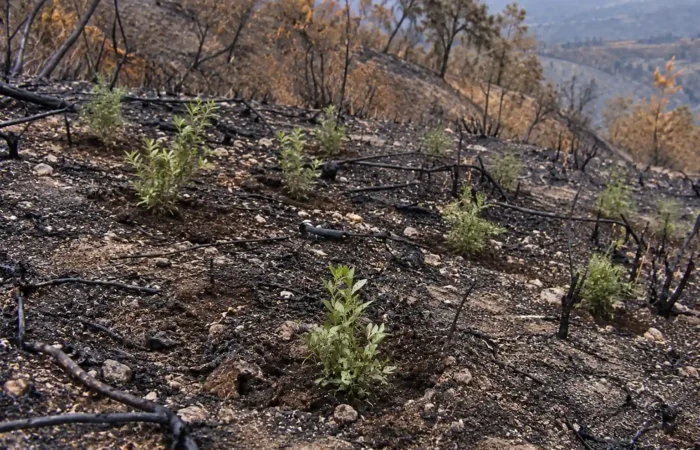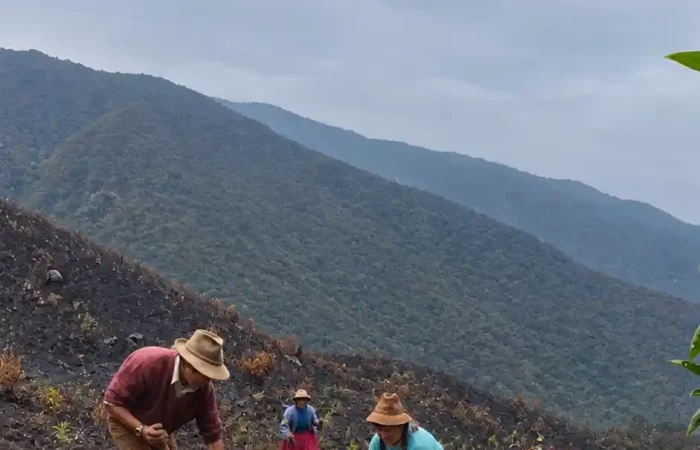

A carbon sink is a natural system that absorbs more carbon dioxide (CO₂) from the atmosphere than it releases. Carbon sinks are fundamental components of the global carbon cycle, the natural process that moves carbon between the atmosphere, oceans, soils, and living organisms. By capturing and storing carbon, these systems help regulate atmospheric CO₂ concentrations and play a critical role in climate change mitigation.
Among the most important natural carbon sinks are forest ecosystems. Through the biological process of photosynthesis, trees absorb atmospheric CO₂ and convert it into organic carbon compounds. This carbon becomes part of the tree’s physical structure, accumulating in trunks, branches, leaves, and roots, collectively known as forest biomass.
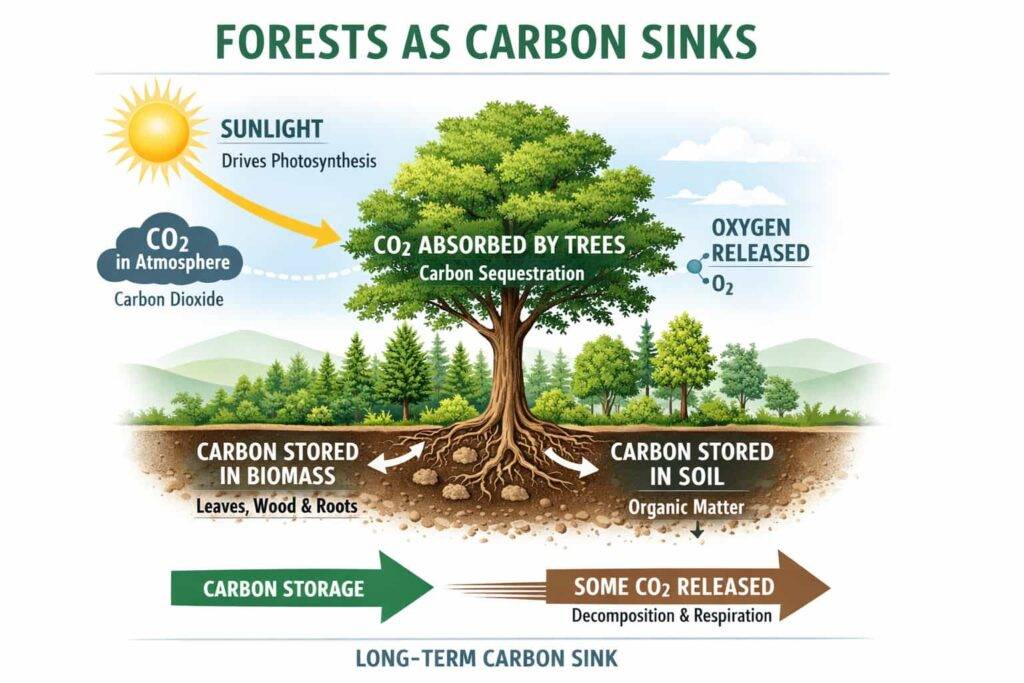
Carbon storage in forests does not occur only above ground. A significant portion of carbon is also stored below the surface in forest soils. When leaves fall, roots grow and die, and organic material decomposes, carbon becomes incorporated into soil organic matter. Over time, this process creates long-term carbon storage reservoirs that can persist for decades or even centuries.
Within the global carbon cycle, these natural carbon sinks help offset part of the greenhouse gas emissions generated by human activities. As forests grow and expand, their ability to perform CO₂ capture increases, making them one of the most effective natural mechanisms for reducing atmospheric carbon concentrations.
Types of Natural Carbon Sinks
Several ecosystems function as natural carbon sinks, including:
• Forests, which store carbon in vegetation and soils
• Soils, where organic carbon accumulates through biological activity
• Oceans, which absorb significant amounts of atmospheric CO₂
• Wetlands, where carbon is stored in water-saturated soils and plant matter
Among these systems, forests are particularly important because they combine carbon capture, biodiversity protection, and ecosystem restoration.
How Forest Carbon Storage Works
Forests store carbon through multiple ecological pathways. During photosynthesis, trees absorb CO₂ and convert it into organic matter that forms plant tissues. As trees grow, carbon accumulates in aboveground biomass, including trunks and branches, and in belowground biomass, primarily roots.
Additional carbon is incorporated into forest soils as organic matter decomposes. These combined processes allow forests to function as long-term carbon reservoirs within the carbon cycle.
This publication also includes educational graphics that explain these processes visually. The graphics illustrate how trees absorb CO₂ from the atmosphere, how carbon becomes stored in forest biomass, and how forest ecosystems function as carbon sinks within the global carbon cycle. Visual explanations help translate complex climate science concepts into accessible information for broader audiences.
Carbon Sinks and Climate Stability
Strengthening natural carbon sinks is essential for global climate action. As atmospheric CO₂ concentrations increase, restoring forests through reforestation and ecological restoration helps expand the Earth’s capacity to remove carbon from the atmosphere.
Healthy forests also provide critical ecosystem services. They regulate water cycles, stabilize soils, protect biodiversity, and moderate local temperatures. These ecological functions contribute directly to climate resilience and environmental stability.
Environmental and Community Benefits
Restoring forest carbon sinks also generates meaningful social impact. Reforestation projects create green employment opportunities, strengthen rural livelihoods, protect watersheds, and improve local climate resilience.
Community-based restoration initiatives empower local populations to actively participate in ecosystem stewardship while promoting sustainable development.
A Measurable Climate Solution
Scientific reforestation initiatives help restore natural carbon sinks while contributing to measurable carbon footprint reduction and climate mitigation. Transparent monitoring and verification systems ensure that restoration projects generate credible environmental impact.
Discover how we restore natural carbon sinks and measure their climate impact:
https://reforestrees.org/on-chain-impact-open-forest-protocol/
Supporting science-based forest restoration is an investment in climate stability, biodiversity conservation, and sustainable communities. By restoring ecosystems today, we strengthen the planet’s capacity to regulate carbon tomorrow.