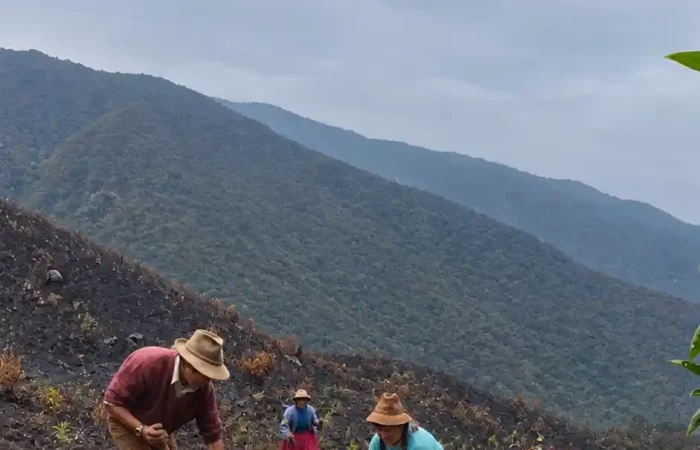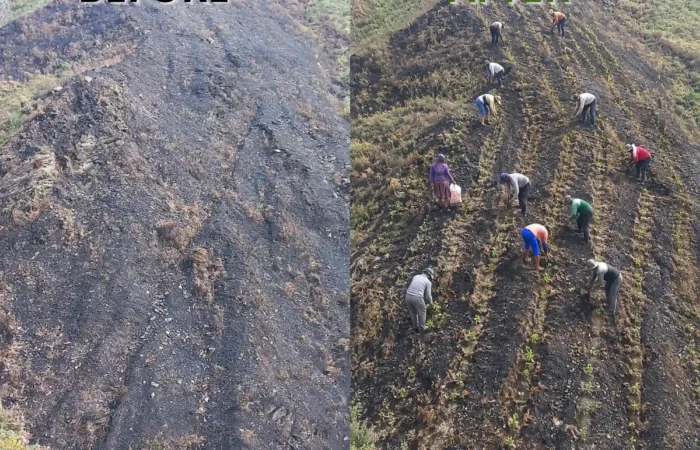

Wildfire recovery is not achieved through a single intervention. Forest landscapes require careful observation, field work, ecological restoration, monitoring and the ability to adapt decisions as conditions change.
In Choras, the recovery approach is focused on building a responsible restoration process that connects ecological restoration with community participation and long-term monitoring.
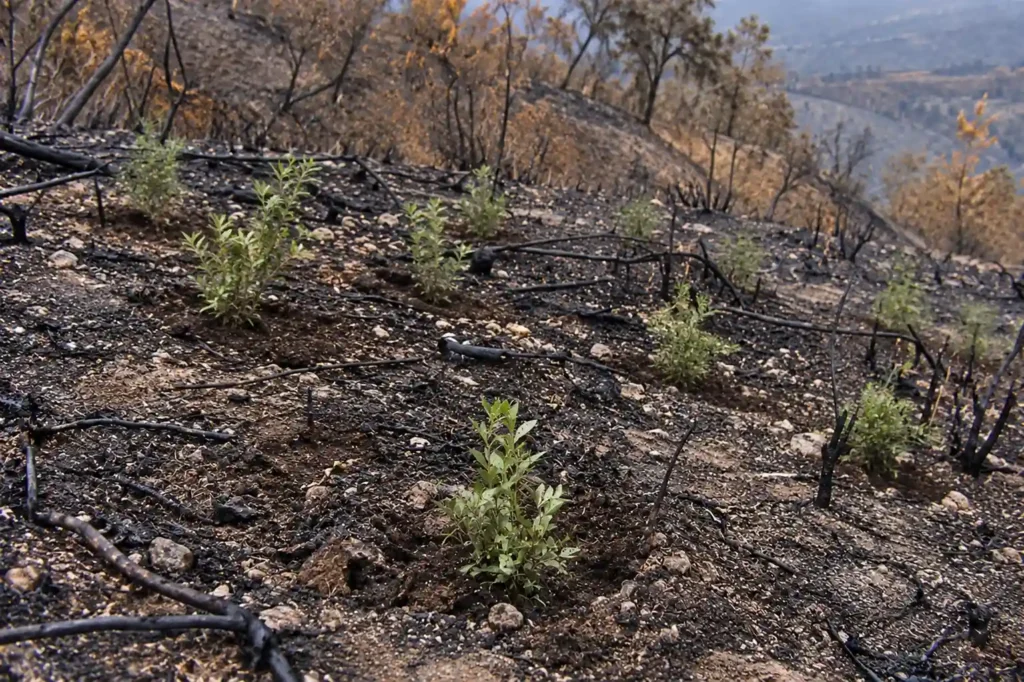
Why Forest Recovery Requires More Than Planting Trees
After wildfire, a landscape does not respond uniformly. Some areas may have the capacity for natural regeneration, while others may require carefully planned restoration interventions. Understanding these differences is essential for responsible post-wildfire recovery.
For this reason, forest restoration should begin with understanding the landscape rather than assuming that planting trees everywhere is the appropriate solution.
A responsible recovery process considers what can recover naturally, what requires intervention and how the landscape changes over time.
An Evidence-Based Approach to Ecological Restoration
The Choras recovery effort is guided by a principle that is fundamental to responsible restoration:
Recovery must be built—not just promised.
This means connecting field observations with restoration decisions and documenting the process over time. Monitoring can help identify changes in vegetation, landscape conditions and restoration needs, allowing future actions to be informed by evidence rather than assumptions.
Ecological restoration is therefore understood as an ongoing process rather than a one-time activity.
Connecting Restoration With Community Participation
Long-term forest recovery also depends on people.
Community participation can contribute to the continuity, local relevance and accountability of restoration efforts. When ecological restoration is connected with communities, the process can address both landscape conditions and the human context surrounding them.
The objective is not simply to increase the number of planted trees. It is to contribute to a recovery process that is responsible, observable and capable of learning from the landscape.
Monitoring, Adaptation and Long-Term Commitment
Post-wildfire restoration requires patience. Ecological processes develop over time, and restoration decisions may need to change as new information becomes available.
Long-term monitoring provides an important foundation for documenting progress and identifying where additional intervention may be appropriate.
This approach recognizes that successful restoration cannot be defined by a single planting event. It must be understood through continued observation, responsible management and evidence collected throughout the recovery process.
Supporting the Choras Wildfire Recovery Effort
The Choras wildfire recovery project is part of a broader commitment to responsible forest restoration and long-term environmental stewardship.
Those who wish to support this work can contribute through the official GlobalGiving campaign for the Choras wildfire recovery project:
Help Choras Families Restore Forest After Wildfire — GlobalGiving:
https://www.globalgiving.org/microprojects/help-choras-families-restore-forest-after-wildfire/
Support can also be provided directly to Reforest Trees through its official donation page:
Support Reforest Trees directly:
https://reforestrees.org/donate/
Every contribution can help create the conditions needed for restoration activities, monitoring and continued work to move forward.
Forest recovery is not simply about planting trees. It is about understanding the landscape, protecting natural recovery where possible, restoring where intervention is needed, monitoring change and remaining committed to the process.
Recovery must be built—not just promised.