
The Wildfire Has Passed. The Work of Recovery Continues.
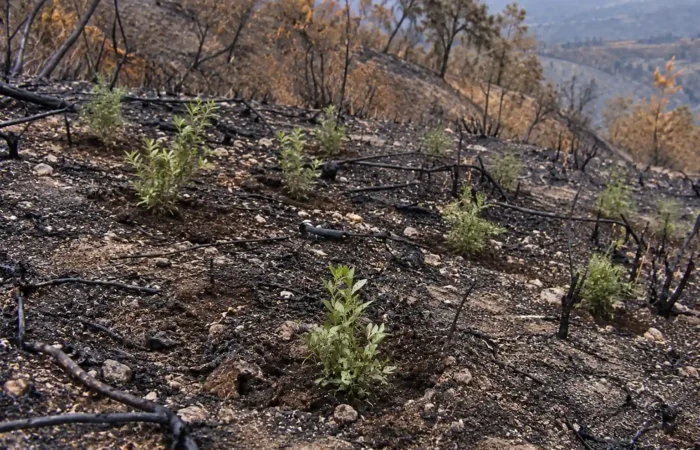
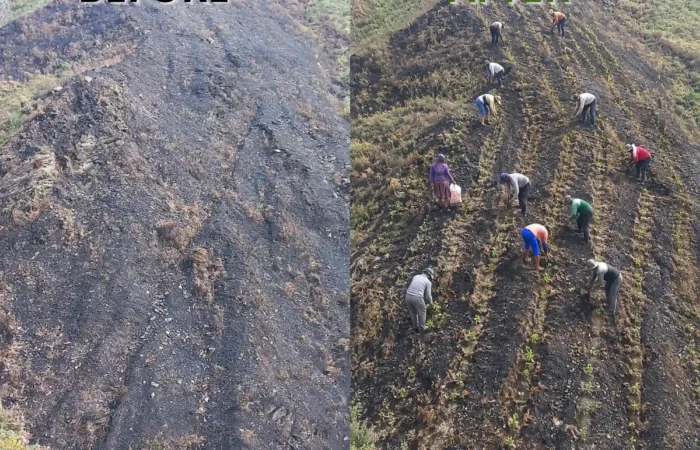
In Choras, Junín, Peru, a wildfire has damaged part of a landscape where forest restoration was already underway. The immediate fire has ended, but ecological recovery continues. Vegetation, soils, habitat conditions, and natural regeneration may all be affected, while rural families involved in restoration can also face disruption.
The next phase must be based on assessment, not assumptions.
Support the Choras Wildfire Recovery Project
Understanding What Happens After Wildfire
Some vegetation may survive. Some areas may retain the capacity to regenerate naturally, while others may require targeted restoration. Exposed soils can face greater erosion risk, and damaged vegetation can alter habitat conditions and ecological processes.
That is why responsible post-wildfire restoration begins by asking what remains, what is recovering, and where intervention can make a meaningful difference.
The GlobalGiving recovery project in Choras is designed around this approach. Its first phase includes assessing priority areas, protecting surviving vegetation, supporting natural regeneration, replanting native species where needed, and monitoring recovery. The project also includes measures to reduce future fire risk and strengthen community stewardship.
Restoration Is More Than Planting Trees
Planting can be one tool in ecological restoration, but it should not be the only measure of success. A responsible restoration process considers whether vegetation survives, whether natural regeneration is protected, whether ecological functions begin to recover, and whether the landscape can become more resilient over time.
In Choras, this means directing resources according to field conditions rather than applying the same intervention everywhere. The goal is not simply to replace damaged vegetation as quickly as possible. It is to support a recovery process that is appropriate to the landscape and can be monitored over time.
Community-Led Recovery
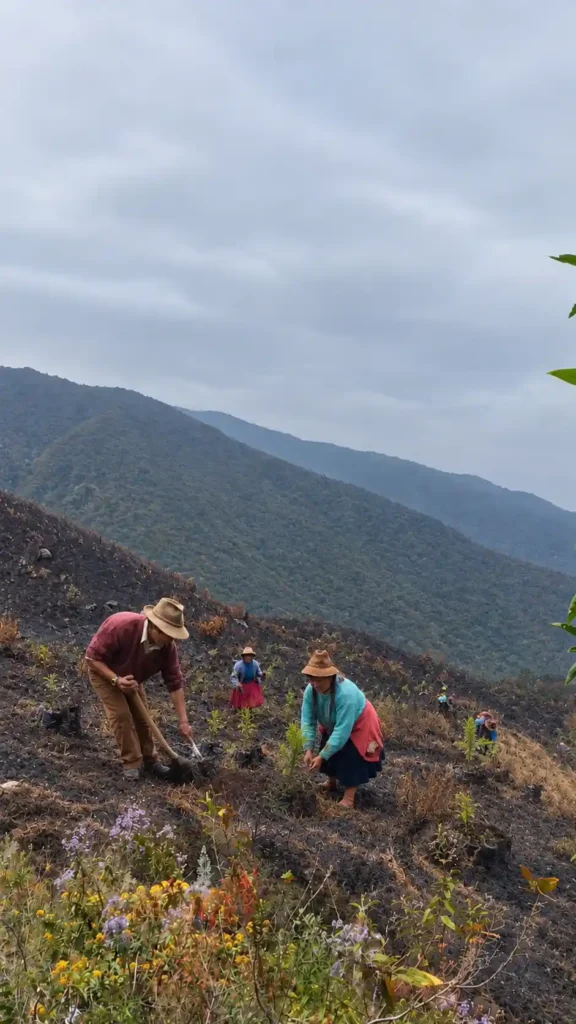
Forest restoration is also a community process. Local people contribute knowledge, time, and field capacity to restoration, maintenance, monitoring, and long-term stewardship. Their participation connects ecological recovery with local livelihoods and strengthens the ability of communities to care for the landscape.
Environmental restoration cannot be separated from the people who live alongside the ecosystem. Supporting recovery therefore means supporting both the land and the local capacity needed to protect it.
Help support community-led restoration in Choras
Why Support Matters Now
Continuing post-wildfire recovery requires resources. The continuity of an important partnership supporting this work is currently at risk. If the resources required to continue are not secured, more than 80 local jobs connected to restoration work could potentially be affected.
We share this information as part of our commitment to transparent communication. The purpose is to explain why timely support matters for ecological restoration and community participation.
A contribution can help sustain activities needed to move the recovery process forward, including field assessment, restoration work, monitoring, community participation, and measures that strengthen resilience.
From Wildfire Damage to Measurable Recovery
Recovery should be documented over time. Rather than measuring progress only by the number of trees planted, responsible restoration looks at what survives, what regenerates, what requires intervention, and how the ecosystem changes through monitoring.
The Choras project provides a framework for moving from wildfire damage toward measurable recovery: assess the landscape, protect what can recover naturally, restore where intervention is necessary, involve local communities, and monitor the results.
GlobalGiving identifies the Choras initiative as an ecosystem restoration project in Peru. Its project description states that support is intended for priority-area assessment, protection of surviving vegetation, natural regeneration, native replanting where needed, community-led protection, monitoring, and measures to reduce future fire risk.
Donate to the Choras Wildfire Recovery Project
The Recovery Has Begun. Help Keep It Moving.
The fire may have passed, but recovery is not an event that happens overnight. It is a process that requires evidence, people, resources, and continuity.
Your support can help local communities and the recovering landscape move forward together.
Restore what can recover. Support what needs intervention. Monitor what changes. And help build a more resilient future for Choras