
What Happens to a Community After a Wildfire?
When a wildfire ends, recovery begins—but the landscape and the community may face challenges that continue for years.
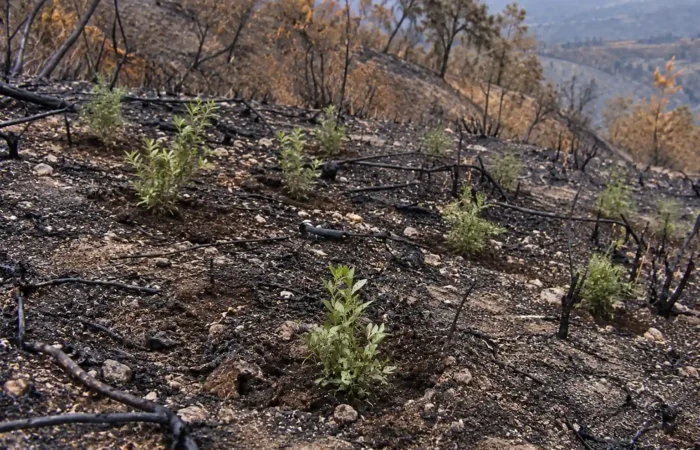
Fire can remove vegetation, alter habitats, expose soils to erosion, disrupt water regulation, reduce stored biomass and carbon, and affect agricultural and other local livelihoods. The consequences therefore extend beyond the burned area itself. FAO identifies wildfire recovery as a process that can involve restoring damaged landscapes, rebuilding livelihoods, creating employment, and supporting affected communities. UNDRR likewise defines recovery as restoring or improving environmental, social, economic, physical, cultural, health, and livelihood systems while reducing future disaster risk.
For rural communities, this means recovery must address both ecological conditions and human capacity.
The objective is not simply to replace what was lost. It is to understand what happened, identify what can recover naturally, determine where intervention is necessary, and build stronger systems for the future.
The Community Is a Key Actor in Recovery
A resilient recovery begins with participation.
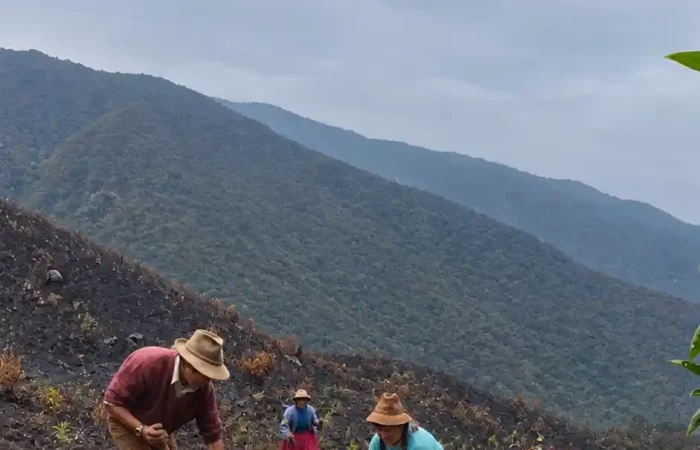
Local communities often possess detailed knowledge of land use, water sources, productive areas, vegetation patterns, access routes, and environmental changes. When this knowledge is combined with ecological assessment and technical expertise, restoration planning can become more locally appropriate and effective.
Community participation can include:
- Assessing affected areas and documenting environmental conditions
- Supporting nursery recovery and production of appropriate plant species
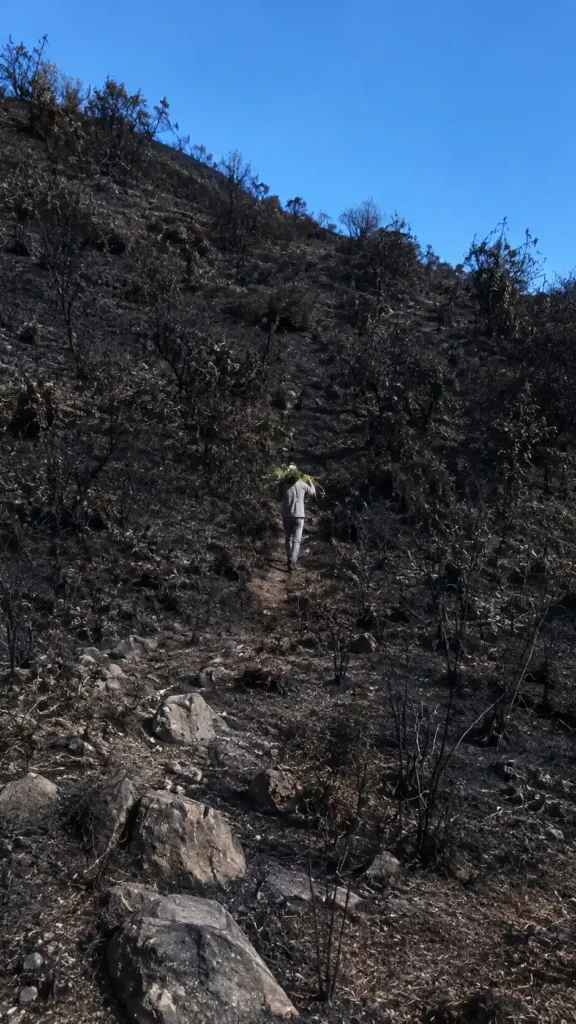
- Preparing restoration sites
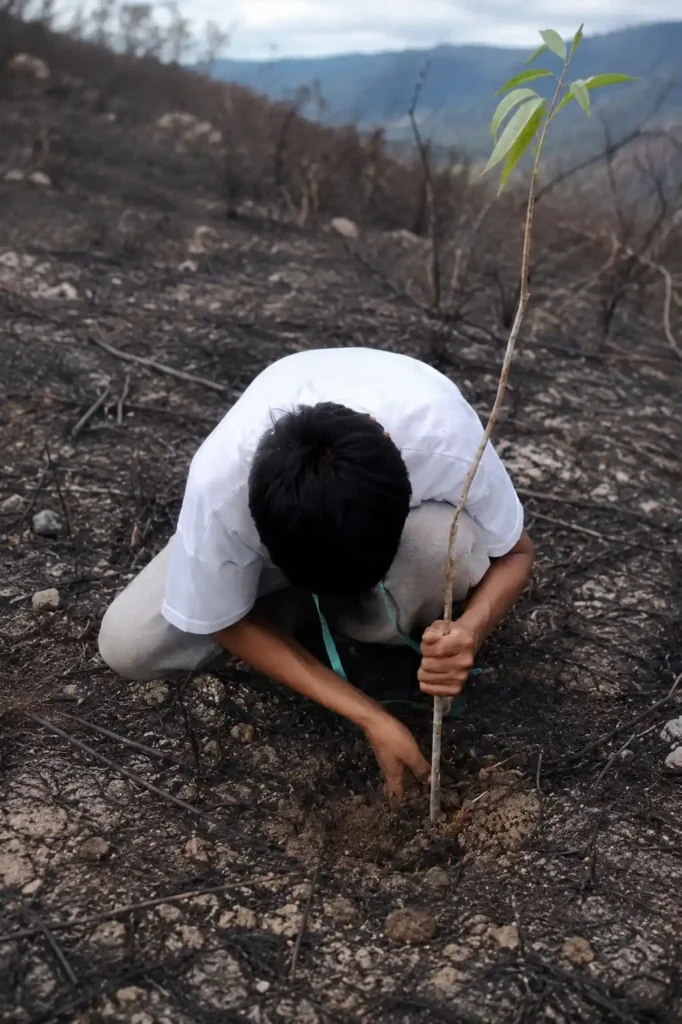
- Implementing ecological restoration activities
- Maintaining restored areas
- Monitoring survival and vegetation development
- Participating in environmental education
- Strengthening community fire prevention and vigilance
- Developing green employment opportunities
This creates a practical pathway:
Knowledge → Participation → Work → Restoration → Resilience → Local Development
The community is therefore not simply a recipient of assistance. It is an active participant in restoring its own territory.
Forest Restoration Requires More Than Planting Trees
One of the most important principles in post-wildfire restoration is that every burned landscape should not automatically be replanted.
Scientific restoration begins with assessment.
The severity of the fire, soil condition, remaining vegetation, seed sources, landscape connectivity, hydrological processes, invasive species pressure, and future disturbance risks all influence the appropriate restoration strategy.
Where ecological conditions are favorable, natural or assisted natural regeneration may be the most appropriate approach. FAO identifies natural regeneration as a viable restoration pathway when sufficient regeneration exists, seed sources are available, disturbances can be controlled, and communities have the capacity and incentives to support long-term recovery.
Where natural recovery is insufficient, active restoration may be necessary. This can include erosion control, enrichment planting, protection from further disturbance, and the establishment of suitable native or locally appropriate species.
Research on post-fire restoration in Latin American forests similarly emphasizes that restoration decisions depend on environmental, technical, management, and socioeconomic conditions. Both passive and active approaches can have a role depending on the ecosystem and the objectives of restoration.
The principle is clear:
Restore according to ecological need—not according to a one-size-fits-all planting model.
Recovering Ecosystems and Local Livelihoods Together
A wildfire can affect more than vegetation. When communities depend on agriculture, forest resources, water systems, or other land-based activities, ecological degradation can become an economic challenge.
Restoration can therefore contribute to both environmental recovery and local development.
Nursery production, site preparation, maintenance, monitoring, ecological education, and restoration work can create opportunities for green employment while strengthening local technical capacity.
At the same time, recovering vegetation can contribute to soil protection, watershed functions, biodiversity recovery, and the restoration of ecosystem services.
This is why post-fire restoration should be understood as a long-term development process rather than a short-term planting campaign.
Science, Monitoring, and Transparent Restoration
Responsible restoration requires evidence.
Before intervention, the affected landscape should be assessed. During implementation, restoration activities should be documented. Over time, indicators such as survival, vegetation development, ecological condition, and site recovery can help determine whether interventions are achieving their intended objectives.
For REFOREST TREES, this principle connects:
Restoration + Communities + Measurement + Transparency + Climate Action
Digital and geospatial tools can support this approach by documenting project locations, monitoring restoration progress, and improving transparency. Platforms and systems used within the broader restoration and environmental monitoring ecosystem can contribute to evidence-based project management, provided their specific capabilities and data are appropriately validated.
Monitoring is not simply a technical requirement. It is part of accountability to communities, partners, supporters, and the ecosystems being restored.
From Wildfire Recovery to Community Resilience
Recovery should also reduce future vulnerability.
Environmental education, fire prevention, sustainable land management, community monitoring, and ecological restoration can help communities build capacity before the next environmental shock occurs.
This connects post-wildfire recovery with broader sustainable development priorities, including decent work and green employment, climate action, biodiversity conservation, and resilient rural development.
The goal is not to return to the exact conditions that existed before the fire at any cost. The goal is to support an ecologically appropriate recovery trajectory while strengthening the community’s ability to manage future risks.
Restoration Is a Process, Not a Single Event
A burned landscape does not recover in one intervention.
Recovery may involve assessment, protection, natural regeneration, active restoration, maintenance, monitoring, environmental education, and continued community participation. The appropriate combination depends on the ecosystem and the severity and characteristics of the disturbance.
This long-term perspective is essential because scientific evidence shows that vegetation composition, soil processes, and hydrological functions can recover at different rates following wildfire. Restoration therefore requires patience, adaptive management, and continued observation.
The recovery of a territory and the recovery of its community are interconnected.
When people participate in restoration, acquire technical skills, generate green employment, protect natural resources, and strengthen environmental knowledge, ecological recovery can become a pathway toward greater community resilience.
Supporting Community-Led Restoration
Supporting post-wildfire restoration means supporting more than trees.
It means supporting scientific assessment, ecological recovery, community participation, environmental education, green employment, monitoring, and the long-term protection of restored landscapes.
Your support can help turn wildfire recovery into an opportunity for ecological restoration and stronger community resilience.
Learn how you can contribute to this work through REFOREST TREES.