
1. The Carbon Debate: Between Urgency and Exaggeration
Carbon in trees has become central to global climate discourse. Yet public communication often oversimplifies a complex biological process. Claims of “instant carbon capture” or “guaranteed offsets” undermine credibility and weaken climate integrity.
Responsible climate restoration requires scientific transparency. Forests are powerful carbon sinks—but their contribution depends on species selection, ecological conditions, management practices, and long-term monitoring.
If you want to support restoration grounded in measurable impact, Dona para impulsar restauración con impacto real:
https://reforestrees.org/donate/
2. What Is Forest Biomass and How Does It Store Carbon?
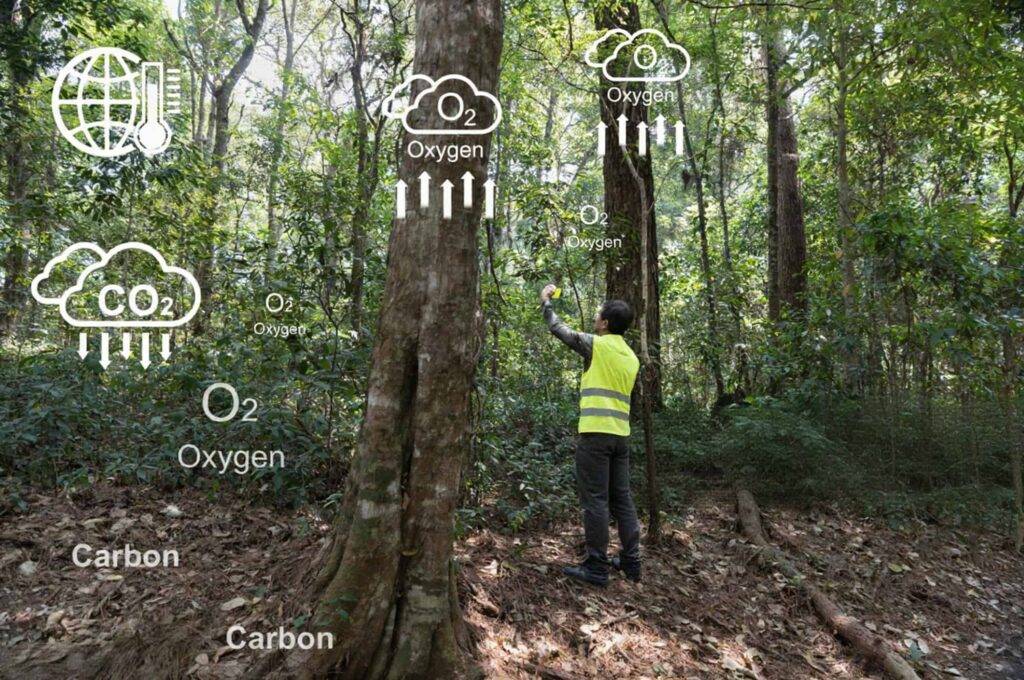
Forest biomass refers to the total mass of living biological material in trees, including trunks, branches, leaves, and roots. Through photosynthesis, trees absorb atmospheric carbon dioxide (CO₂) and convert it into organic carbon compounds that form plant tissue.
Roughly half of dry woody biomass consists of carbon. As trees grow, they accumulate biomass, and therefore store increasing quantities of carbon in their structure. Additionally, forest ecosystems contribute to belowground carbon through root systems and soil organic matter.
However, carbon in trees is not a static number. It evolves over time as trees grow, compete, mature, and, eventually, decompose. Accurate carbon accounting requires species-specific growth models, allometric equations, and continuous field measurements.
This is where forest biomass science intersects with rigorous carbon accounting.
3. The Time Factor in Carbon Capture
Carbon capture is not instantaneous. It is a biological process governed by tree physiology and ecological dynamics.
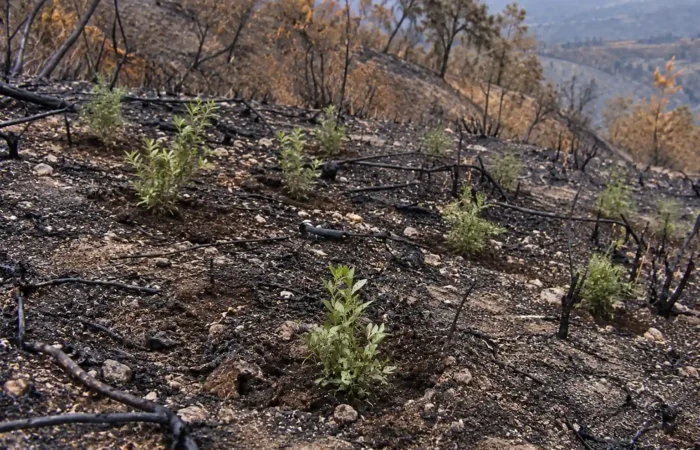
In the initial establishment phase, young seedlings allocate energy to root development and structural stability. Carbon accumulation is modest during this period.
In the accelerated growth phase, typically occurring after establishment, biomass accumulation increases significantly. Trees expand in diameter and height, and carbon storage rises more rapidly.
In the maturation phase, growth rates may stabilize or slow, but total stored carbon continues increasing as biomass accumulates.
Carbon sequestration depends on:
- Species characteristics
- Local climate conditions
- Soil fertility
- Forest density and management practices
Any claim that ignores these variables risks exaggeration. Scientifically responsible communication acknowledges variability and long-term monitoring requirements.
4. What Can Be Responsibly Stated
We can responsibly state that:
- Trees absorb CO₂ through photosynthesis.
- Growing forests increase biomass and therefore store carbon.
- Well-managed restoration enhances long-term carbon sequestration potential.
- Carbon accumulation requires time and consistent monitoring.
We cannot responsibly claim:
- Instant carbon neutrality through tree planting alone.
- Fixed carbon quantities without field-based measurement.
- Permanent storage without ongoing stewardship and monitoring.
Integrity in climate communication strengthens trust and avoids greenwashing. Credible restoration aligns expectations with ecological reality.
5. Community Monitoring and Local Employment
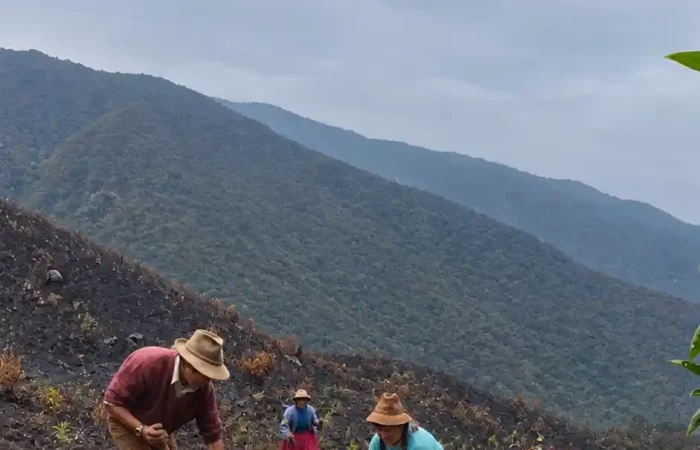
Forest monitoring is not an abstract technical exercise. It is implemented on the ground by trained community brigades in Shipibo territories and Andean Sierra regions.
Local monitoring teams conduct:
- Tree diameter and height measurements
- Survival rate assessments
- Plot-level biomass sampling
- Data collection for carbon modeling
This forest monitoring generates paid local employment. Community members are trained in measurement protocols and data recording, linking climate impact directly to dignified economic opportunity.
Climate restoration is therefore both ecological and social. Verified carbon capture depends on consistent field data—and that data depends on community-led monitoring.
6. MRV and Public Transparency
Measurement, Reporting, and Verification (MRV) systems ensure that carbon claims are grounded in evidence.
You can Ver cómo el MRV respalda la captura de carbono:
https://reforestrees.org/on-chain-impact-open-forest-protocol/
MRV frameworks include:
- Field measurements
- Growth modeling
- Data reporting
- Third-party or protocol-based verification
By integrating digital traceability and transparent reporting, MRV reduces the risk of inflated claims. It allows stakeholders to verify progress and understand how carbon accumulation evolves over time.
Transparency is the foundation of climate integrity. Without MRV, carbon claims remain unverified. With MRV, restoration becomes measurable and accountable.
7. Support Science-Based Climate Restoration
Carbon in trees is real—but it is biological, gradual, and measurable. Responsible climate action requires scientific rigor, community engagement, and transparent verification.
Donations to this initiative support:
- Forest biomass growth grounded in ecological science
- Long-term carbon monitoring
- Paid community employment in forest measurement
- Verifiable climate impact through MRV systems
Your contribution is:
- Science-based climate action
- A long-term investment in ecosystem recovery
- A measurable and transparent impact
Support restoration that prioritizes integrity over exaggeration.