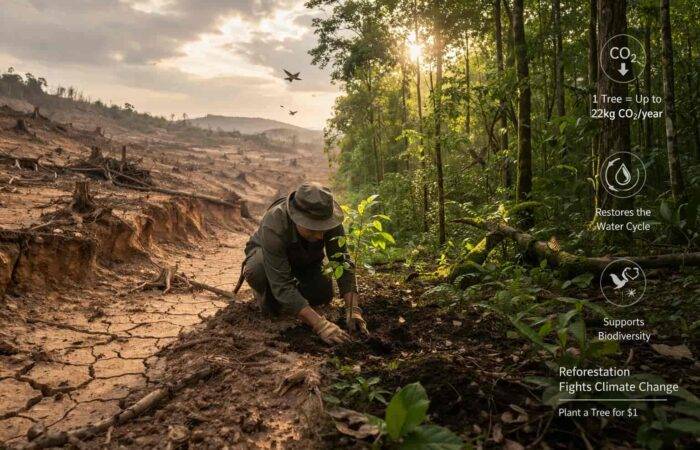

Across the Andes, water security is no longer guaranteed. Rising temperatures, shifting rainfall patterns, and longer dry seasons are altering hydrological cycles that communities have relied on for generations. In Peru’s central highlands, particularly in Junín, rural populations are increasingly exposed to droughts, erratic precipitation, and soil degradation that threaten both livelihoods and drinking water sources.
Water vulnerability is not only a climate issue; it is a landscape issue. Where forests have been degraded, the hydrological balance weakens. Where ecosystems are restored, resilience strengthens. If we are serious about climate adaptation and long-term water security, restoration of Andean forests must be treated as strategic natural infrastructure.
Donate today to strengthen water security:
https://reforestrees.org/donate/
Forests as Natural Infrastructure for Water Security
Forests are not merely collections of trees; they are functional hydrological systems. In high Andean watersheds, native forests regulate water flows through canopy interception, root-mediated soil structuring, and organic matter accumulation.
Healthy forest soils act as sponges. Root systems increase soil porosity, enhancing infiltration and allowing rainfall to percolate into deeper soil layers. This process contributes to aquifer recharge and sustains base flows in streams during dry periods. Without vegetation cover, rainfall becomes surface runoff, accelerating erosion and reducing groundwater replenishment.
This is why forests are recognized as natural infrastructure for water security. Instead of relying solely on engineered solutions such as dams or pipelines, restoring forest cover strengthens the landscape’s intrinsic capacity to regulate water. It reduces peak flows during intense rainfall events, lowering flood risk, while maintaining gradual water release during dry seasons.
In climate adaptation frameworks, forest restoration is a nature-based solution with measurable hydrological benefits.
Forest Restoration and Hydrological Resilience
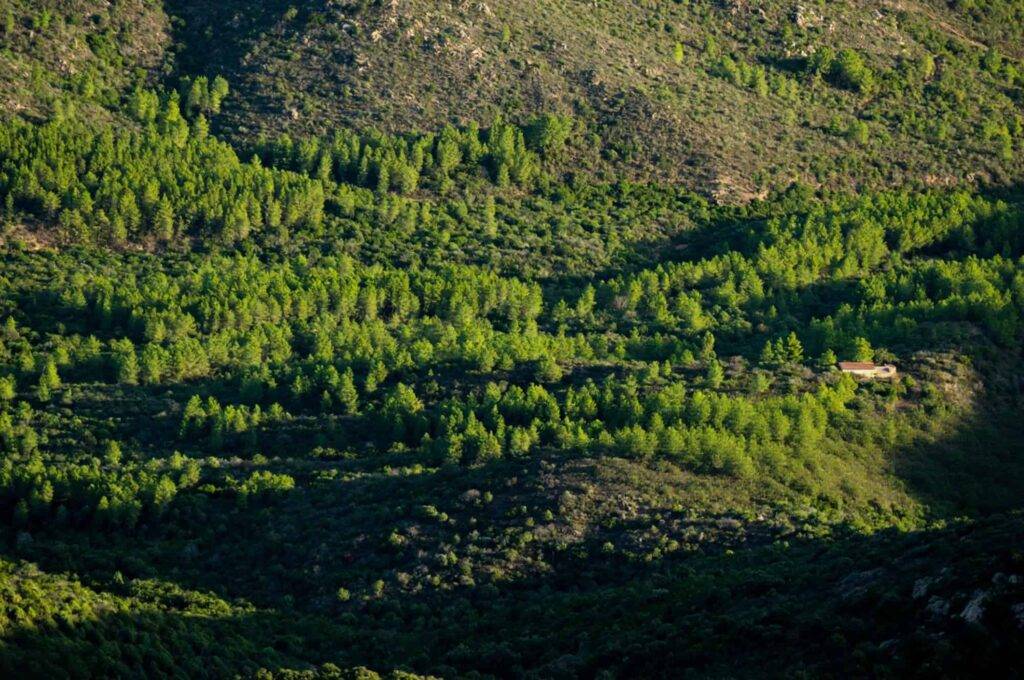
Andean forest restoration in Junín focuses on native species adapted to high-altitude ecosystems. This ecological approach improves three key hydrological functions:
1. Improved Infiltration and Aquifer Recharge
Reforested areas develop deeper root systems and higher soil organic matter. These factors increase water retention capacity and infiltration rates. Over time, this enhances groundwater recharge and stabilizes spring flows—critical for rural water supply systems.
2. Reduced Erosion and Soil Loss
Vegetative cover protects soil from direct rainfall impact. Roots bind soil particles, reducing landslides and sediment transport. Lower sediment loads also protect downstream water infrastructure and irrigation systems.
3. Increased Resilience to Droughts and Extreme Rainfall
Forests moderate hydrological extremes. During heavy rainfall, they reduce surface runoff velocity. During prolonged dry periods, stored soil moisture sustains vegetation and maintains minimum water flows. While restoration does not eliminate climate risk, it significantly improves adaptive capacity at the watershed level.
Water and forests are interdependent systems. Investing in restoration is therefore an investment in long-term water security and climate resilience.
Local Employment in the Sierra of Junín
Communities in the Sierra of Junín are not passive beneficiaries. They are the implementers and long-term stewards of restoration activities.
Local residents lead nursery production, planting operations, monitoring, and maintenance of restored areas. Paid local employment strengthens rural economies by diversifying income sources beyond subsistence agriculture. This reduces economic vulnerability and creates incentives for long-term forest protection.
Rural employment is not a secondary outcome; it is a core pillar of sustainability. When communities are remunerated for ecological restoration:
- Local technical capacity increases
- Maintenance of planted areas is ensured
- Collective ownership of watershed protection is reinforced
- Economic resilience improves alongside ecological resilience
By linking Andean forest restoration with dignified employment, the initiative consolidates both environmental and social outcomes. Climate adaptation becomes locally anchored and economically viable.
Public Evidence and Transparency
Accountability is essential to avoid greenwashing. Every restoration initiative must demonstrate verifiable impact.
You can verify transparency through:
View the project on the Reforest Trees public map:
https://explorer.land/x/organization/ret/projects
View the project on the Open Forest public map:
https://atlas.openforestprotocol.org/1746399156636
These public platforms allow anyone to verify:
- Geographic location of restored areas
- Project boundaries
- Monitoring data
- Organizational transparency
Open-access mapping ensures that donations translate into traceable, measurable impact. Public Monitoring, Reporting and Verification (MRV) systems strengthen credibility and align with best practices in climate finance and ecosystem restoration.
Transparency transforms concern into trust—and trust enables long-term action.
Long-Term Impact: Water, Climate, and Community Stability
Restoring Andean forests is not a short-term campaign. It is a structural intervention in watershed governance and rural development.
Over time, restored landscapes:
- Improve basin-level water regulation
- Reduce infrastructure maintenance costs linked to sedimentation
- Strengthen climate adaptation capacity
- Stabilize rural incomes through sustained local employment
This integrated model demonstrates that water security, climate resilience, and rural employment are mutually reinforcing objectives. Forests function simultaneously as ecological regulators, economic assets, and climate buffers.
Donations to this initiative are not symbolic gestures. They are investments in preventive climate action and measurable environmental performance.
Donate Today for Water and Resilience
Water security depends on functioning ecosystems. Climate resilience depends on proactive restoration. Rural stability depends on sustainable local employment.
Donate today to restore Andean forests, strengthen hydrological resilience, and sustain local employment in the Sierra.
Your contribution is:
- An investment in water security
- A preventive action against climate risk
- A measurable and publicly verifiable impact
Support restoration that is scientific, community-led, and transparent.