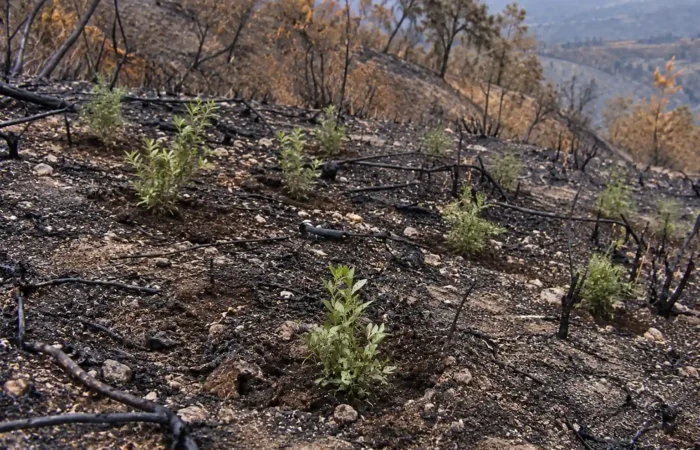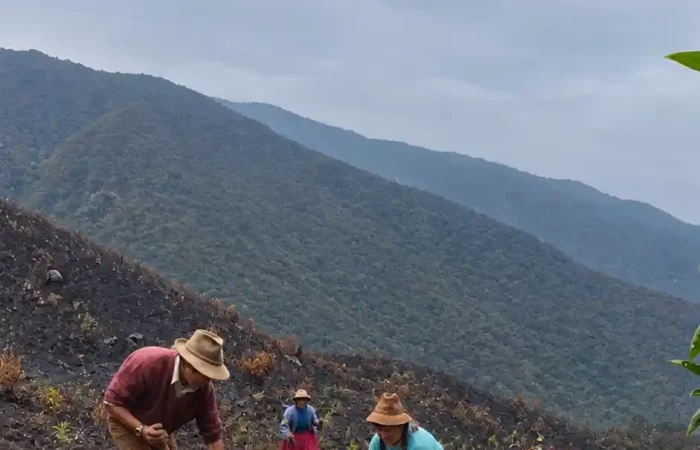

The fire may end. The ecological consequences can last for years.
A wildfire is not only a moment of flames, smoke, and destruction. For a forest ecosystem, the effects can continue long after the visible fire has disappeared.
When vegetation burns, the consequences may extend across the entire ecological system. Trees and other plants can be killed or weakened. Habitat can be lost or fragmented, forcing wildlife to move or reducing the resources available for biodiversity. Organic matter in the soil can be altered or lost, while exposed ground may become more vulnerable to erosion.
The relationship between forests, soil, and water can also change.
Vegetation and healthy soils play important roles in infiltration, water retention, nutrient cycling, and landscape stability. After a severe wildfire, changes in vegetation cover and soil properties can increase vulnerability to erosion and runoff, particularly when intense rainfall occurs before ecological recovery has taken place. In mountainous landscapes, degraded slopes may also face greater exposure to instability and landslide risk.
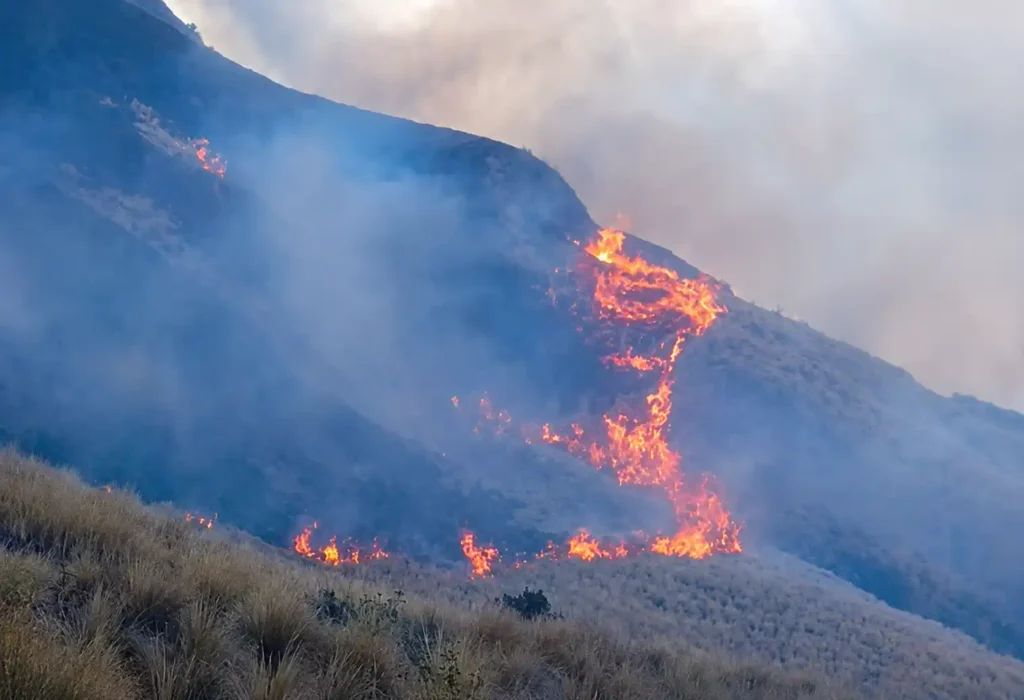
There is another consequence that cannot be seen directly: carbon.
Forests store carbon in living biomass, dead organic matter, and soils. Wildfires can release part of that stored carbon into the atmosphere while simultaneously reducing the capacity of degraded ecosystems to continue providing ecological services. The long-term balance depends on many factors, including fire severity, ecosystem type, climate, natural regeneration, and the effectiveness of subsequent recovery processes.
This is why the end of a wildfire should never be confused with the end of its ecological impact.
At Reforest Trees, the approach to reforestation begins with a broader principle: restoring an ecosystem is more complex than replacing the number of trees that were lost.
Ecological restoration requires understanding the landscape before deciding what should be planted. Depending on the site, restoration may involve assessing degradation, understanding local ecological conditions, identifying appropriate native species, restoring vegetation structure, protecting recovering areas, and working alongside local communities.
It also requires patience.
A resilient forest is not created in a single planting season. Ecosystem recovery can take years or decades, and different ecological functions recover at different rates. Biodiversity, soil health, water regulation, vegetation structure, and carbon sequestration must be considered as interconnected components of a living system.
For this reason, Reforest Trees promotes restoration based on planning, evidence, community participation, monitoring, and long-term ecological thinking.
Where appropriate, tools such as geospatial monitoring, geographic information systems, satellite-based observations, and MRV (Measurement, Reporting and Verification) can contribute to documenting changes over time. These approaches can help generate evidence of restoration progress, support adaptive management, and improve understanding of how degraded landscapes respond to intervention.
The objective is not simply to place trees in the ground.
It is to create the conditions in which ecosystems can recover their functions, biodiversity can return, soils can stabilize, water processes can improve, and landscapes can become more resilient to future environmental pressures.
We do not simply replace trees. We work toward restoring the ecological systems that make forests valuable in the first place.
Forest restoration is therefore not an immediate replacement project. It is a long-term process connecting forest ecosystems, biodiversity conservation, soil, water, carbon, communities, and climate resilience.
And restoration does not always mean forcing nature to become what it was before. Responsible restoration recognizes that ecosystems are dynamic. It seeks to strengthen ecological functions and resilience while respecting local conditions, native biodiversity, natural regeneration, and the realities of a changing climate.
For communities whose livelihoods and well-being are connected to healthy landscapes, ecological recovery can also contribute to greater environmental security. Restoring forests means investing in the ecological foundations that support water, soils, biodiversity, carbon storage, and sustainable community development.
The question after a wildfire should therefore not only be: How many trees were lost?
We should also ask:
What ecological functions were affected, what can recover naturally, what requires intervention, and how can restoration be measured over time?
These questions transform reforestation from a simple planting activity into a science-based pathway toward ecosystem restoration and climate resilience.
At Reforest Trees, we believe degraded landscapes can become opportunities for recovery when science, communities, responsible restoration, and long-term commitment work together.
When the fire ends, restoration has only begun.
Learn more about Reforest Trees, support responsible forest restoration, share the importance of ecological recovery, and join the effort to build healthier, more biodiverse, and more resilient landscapes for the future.