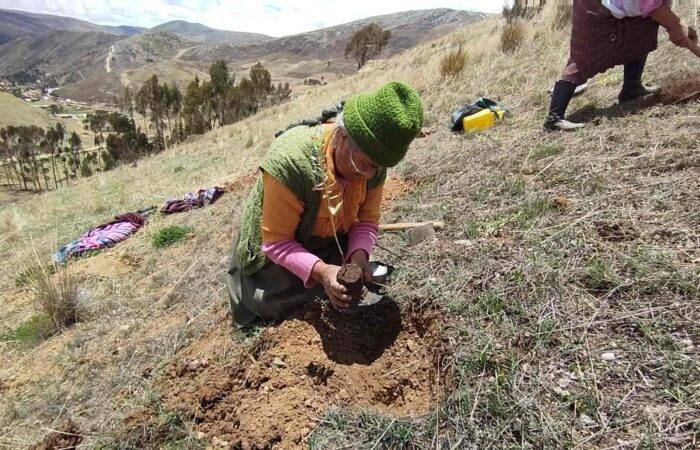

A single tree can absorb up to 22 kg of CO2 per year. Multiply that by millions—and you begin to see the scale of impact reforestation can achieve.
How Reforestation Reduces CO2 and Fights Climate Change
Reforestation is one of the most effective natural climate solutions. Through photosynthesis, trees absorb carbon dioxide (CO2) from the atmosphere and store it as biomass—a process known as carbon sequestration.
This directly reduces atmospheric greenhouse gases, slowing global warming and mitigating the effects of climate change. Large-scale reforestation efforts are recognized by scientists as essential to meeting global climate targets.
Restoring Soil Health and Preventing Land Degradation
Trees play a critical role in soil restoration. Their roots stabilize the ground, prevent erosion, and enhance soil fertility by contributing organic matter.
Degraded lands—often caused by deforestation and unsustainable agriculture—can recover through reforestation, improving their capacity to support life and agriculture sustainably.
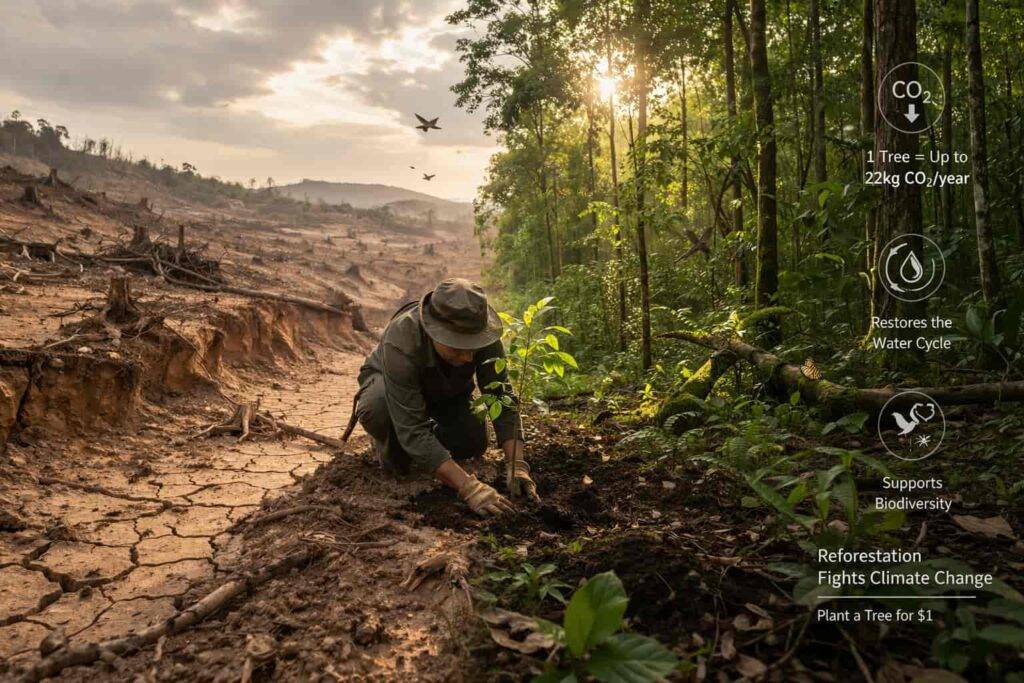
Water Regulation and Climate Stability
Forests regulate the water cycle by increasing rainfall infiltration, maintaining groundwater levels, and reducing the risk of floods and droughts.
Healthy forest ecosystems act as natural water filters, ensuring cleaner water for communities and wildlife while stabilizing local and regional climates.
Biodiversity Recovery: Rebuilding Ecosystems
Deforestation is one of the leading causes of biodiversity loss. Reforestation restores habitats for countless species, helping ecosystems recover and thrive.
A diverse ecosystem is more resilient to environmental stress, making biodiversity restoration a key factor in long-term sustainability.
The Problem: Deforestation and Its Global Consequences
Every year, millions of hectares of forest are lost. This leads to increased CO2 emissions, disrupted ecosystems, degraded soils, and intensified climate change.
Deforestation also accelerates the loss of species and threatens the livelihoods of communities that depend on forests.
Your Carbon Footprint and the Global Climate Crisis
Each individual contributes to the global carbon footprint through daily activities—transportation, energy consumption, and consumption patterns.
Reforestation offers a direct and measurable way to offset emissions and actively participate in climate solutions.
The Solution: Reforestation as a Proven Strategy
Scientific research consistently identifies reforestation as a high-impact, scalable solution to environmental degradation.
And the most powerful part:
With just $1, you can plant a tree.
Measurable Impact: Environmental and Social Benefits
Each tree planted contributes to:
• CO2 capture and climate regulation
• Soil restoration and erosion prevention
• Water cycle stabilization
• Habitat creation for biodiversity
• Job creation and support for local communities
These are tangible, measurable outcomes that create long-term environmental and social value.
Transparency and Trust: Verified Environmental Impact
Modern reforestation initiatives increasingly use transparent tracking systems, including blockchain-based verification, to ensure accountability.
This allows donors to track where and how their contribution is used, reinforcing trust and ensuring real impact.
Act Now: Be Part of the Climate Solution
Climate change is not a distant threat—it is happening now. But solutions exist, and reforestation is one of the most effective actions we can take today.
Plant a tree. Offset your carbon footprint. Restore the planet.