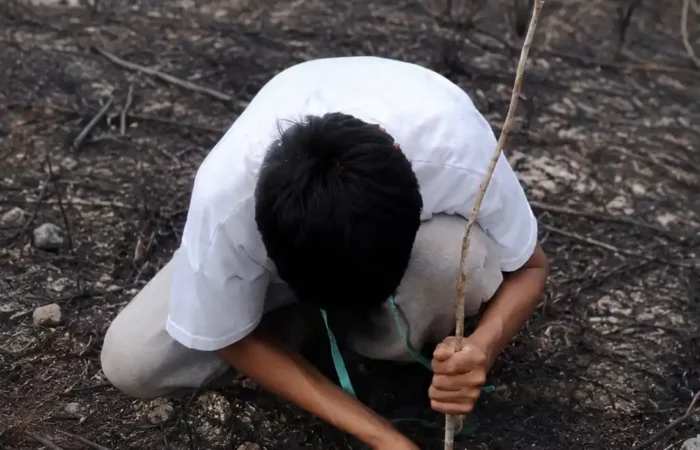

The river no longer reaches our home, Rosa says quietly.
Just a few years ago, her family relied on that river for everything—drinking water, irrigation, and food. Today, it dries earlier each season.
Rosa lives with her husband and two children in a rural community once surrounded by dense forest. That forest is now mostly gone.
A life built around the forest—now disappearing
For families like Rosa’s, forests are not just landscapes. They are the foundation of daily life.
They regulate water cycles, protect soil, and provide food, firewood, and income. In rural communities, forests are deeply tied to survival and long-term sustainability.
But as deforestation expands, that balance is breaking.
When the forest disappears, everything changes
In recent years, large areas around Rosa’s community have been cleared. Without trees, the soil dries and erodes. Rainfall becomes unpredictable. The river that once sustained her family now struggles to flow.
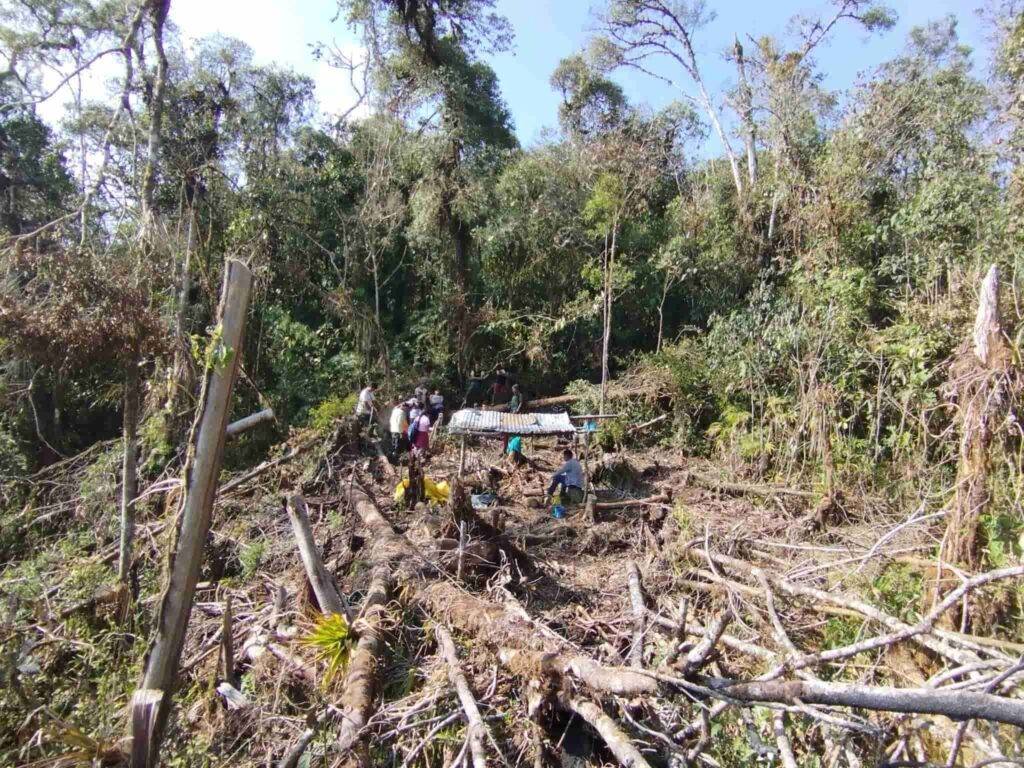
This is not an isolated case—it is part of a global pattern driven by deforestation and accelerating climate change.
The consequences are deeply human
Rosa’s family has seen their crop yields decline. What once fed them year-round now barely lasts through the season.
Food insecurity is no longer a distant risk—it is a daily reality.
Her children walk longer distances to find clean water. School attendance becomes irregular. The future becomes uncertain.
This is how environmental degradation turns into social instability.
From one family to a global crisis
What is happening to Rosa’s family reflects a broader truth.
Deforestation contributes significantly to global greenhouse gas emissions, increasing our collective carbon footprint and accelerating climate change. The loss of forests weakens one of the planet’s most effective natural systems for carbon capture.
The result is a cycle: environmental loss leads to human vulnerability, which in turn deepens global instability.
There is a solution—and it starts with restoration
Reforestation is one of the most effective tools we have to reverse this trend.
Planting trees restores ecosystems, stabilizes soil, and helps regulate water cycles. It also captures CO₂, directly addressing climate change and reducing environmental impact.
For communities like Rosa’s, reforestation is not just environmental—it is economic and social recovery.
With $1, you can plant a tree
A single dollar can contribute to planting a tree that helps rebuild ecosystems and support rural communities.
Each tree represents:
- Carbon capture, reducing the global carbon footprint
- Environmental restoration, improving soil and water systems
- Economic opportunity, creating jobs in local communities
- Resilience, helping families regain stability
This is measurable, real environmental impact.
Transparency and trust matter
Every contribution is tracked to ensure that trees are actually planted and maintained. Through transparent systems, including blockchain-based verification, impact is traceable and accountable.
This ensures that your action leads to real change on the ground.
The future is still being written
Rosa’s story is still unfolding.
The question is whether it continues as a story of loss—or becomes a story of restoration.
The difference is action.
Help restore what has been lost. Support reforestation today.
https://reforestrees.org/one-dollar/