
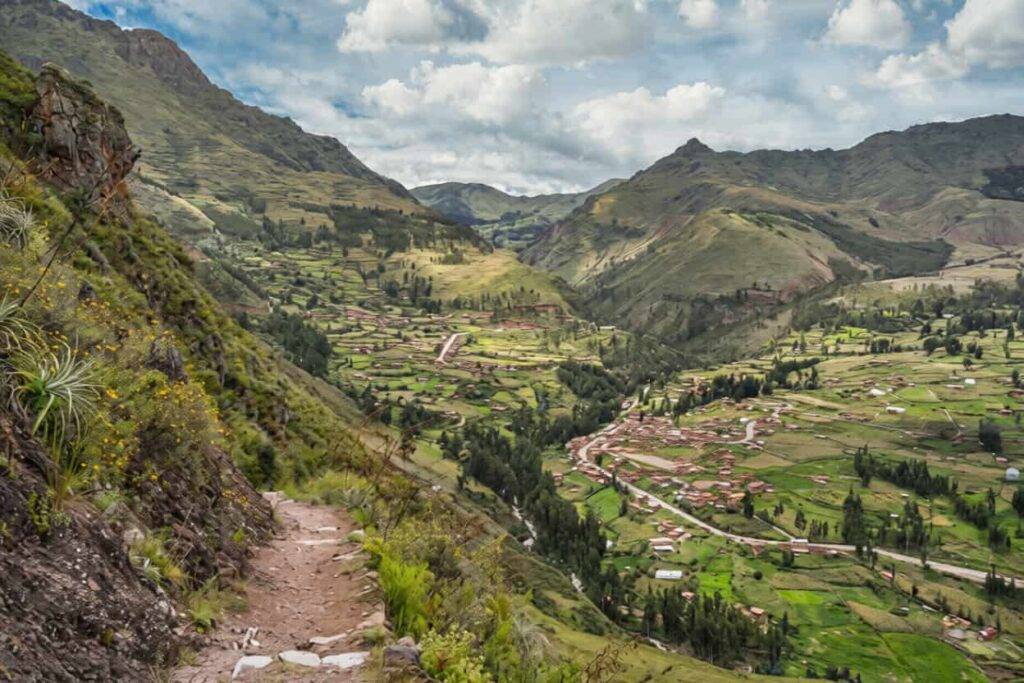
In Peru’s Andean highlands, water and soil are inseparable. Mountain ecosystems regulate water flows that sustain rural livelihoods, downstream cities, and agricultural systems. When soils degrade and vegetation is lost, water regulation weakens—reducing infiltration, increasing runoff, and amplifying vulnerability to droughts and floods. In this context, restoring forest and native vegetation cover is not an environmental luxury; it is a form of natural infrastructure. To understand how this approach is being implemented on the ground, Learn about the restoration project in the Sierra of Junín.
2. The problem — Soil degradation, water stress, and climate vulnerability
Decades of land degradation in highland areas have reduced soil organic matter, compacted soils, and disrupted hydrological cycles. Without vegetation cover, rainfall runs off rapidly instead of infiltrating, increasing erosion and sedimentation while reducing groundwater recharge. Climate change intensifies these challenges by increasing rainfall variability, longer dry periods, and more extreme precipitation events. The result is growing water insecurity for rural communities and downstream users, along with declining land productivity.
3. A nature-based solution — Forest restoration and ecosystem services
Forest and native vegetation restoration in Andean landscapes directly supports key ecosystem services:
- Hydrological regulation: Restored vegetation improves infiltration, promotes groundwater recharge, and reduces surface runoff, helping stabilize water availability across seasons.
- Soil protection and recovery: Root systems stabilize slopes, reduce erosion, and support the gradual recovery of soil structure and fertility.
- Landscape stability: Vegetation buffers reduce vulnerability to landslides and floods, increasing resilience to climate extremes.
These functions make restoration a critical component of water security infrastructure, complementing engineered solutions rather than replacing them. Importantly, restoration outcomes depend on appropriate species selection, site-specific design, and long-term management—avoiding simplistic claims or short-term fixes.
4. The role of Junín communities — Work, stewardship, and territorial management
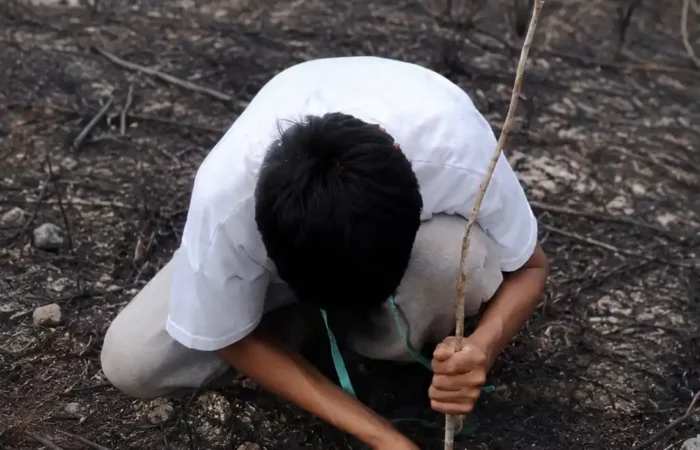
In the Sierra of Junín, restoration is carried out by local communities as direct implementers and land stewards, not passive beneficiaries. Community members are trained and employed in activities such as site preparation, planting, maintenance, and monitoring.
This paid local employment strengthens rural economies while aligning economic incentives with ecosystem recovery. When restoration provides stable work, it reduces pressure on degraded soils, supports long-term land management, and increases the sustainability of the project itself. Restoration becomes a territorial strategy—integrating ecological recovery with livelihoods rather than separating conservation from development.
5. Project evidence — How impact can be verified
Transparency is essential for credibility. The Junín restoration initiative can be independently verified through public platforms. You can See the project on the public Reforest Trees map, where its geographic location, organizational context, and project portfolio are visible.
These links allow anyone to verify where restoration is happening, how it fits within the regional landscape, and how it progresses over time—strengthening accountability and trust. This openness aligns with MRV principles (Measurement, Reporting, and Verification), ensuring that restoration claims are grounded in observable, trackable evidence rather than narratives alone.
6. Long-term impact — Water, soils, and regional resilience
Over time, restored highland ecosystems contribute to more reliable water flows, healthier soils, and increased resilience at the watershed scale. These benefits extend beyond project sites, supporting downstream agriculture, urban water users, and regional climate adaptation. By treating restoration as natural infrastructure, investments today help prevent higher social and economic costs associated with water scarcity and land degradation in the future.
Forest restoration in the Sierra of Junín demonstrates how nature-based solutions can address water security, soil degradation, and rural employment simultaneously. This is not short-term aid—it is a preventive investment with measurable outcomes.
Donate to strengthen water security, restore soils, and sustain rural employment in the Sierra of Junín. Your contribution supports ecosystem services, reduces future climate risks, and delivers transparent, verifiable impact.